
Who will win the World Cup? BBC pundits make their predictions
Who will win the World Cup? BBC pundits share their predictions!
BBC News1 min read

Cattle in England will receive tuberculosis vaccinations starting in 2030 as part of a new strategy to eradicate the disease by 2038. The last badger culls are expected to end by 2029, with an emphasis on cattle vaccination and improved testing.
Cattle will be vaccinated against tuberculosis from 2030 as a “gamechanging” part of a new strategy to drive eradication of the disease in England by 2038. In parallel, the last badger culls are expected to end by 2029, with vaccination of badgers expanded.
More than 20,000 infected cattle are slaughtered each year, costing taxpayers £100m and inflicting a heavy toll on affected farmers’ livelihoods and mental health. Mass culling of badgers began in 2013 and has killed about 250,000 animals, at a cost of about £60m.
The cull has been highly divisive, and the new strategy was developed by a group of farmers, vets, wildlife experts and government officials in order to seek consensus. It acknowledges that cattle catch TB from other cattle 15 times more often than from badgers.
As a result, the focus of the strategy is on cattle, including targeted vaccination, improved testing and reducing the risk of spread between herds via cattle trading, for example by publishing monthly TB risk scores for every cattle herd in England.
Cattle vaccination has long been seen as a powerful tool in eradicating bovine TB (BTB) but is banned in the European Union as it can be hard to distinguish between infected and vaccinated animals. Therefore, a “Diva” test that does this will also need to be rolled out in 2030.
Diplomatic work is needed to enable cattle and dairy farmers to continue to export their products. Government officials were involved in developing the strategy and ministers are expected to implement its recommendations.
John Cross, a livestock farmer and chair of the Bovine TB Partnership, which developed the strategy with more than 100 farmers, vets, scientists and industry and government representatives, said: “This is the best plan for TB freedom we’ve ever had. This is about gamechanging interventions like cattle vaccination. The decline in bovine TB has not been rapid enough and we clearly needed a step change in pace.”
Prof James Wood, of the University of Cambridge, said: “Our studies have demonstrated over 15-fold more transmission occurs between cattle than comes from wildlife – that’s why the focus has to be on cattle.” He said work in Ethiopia showed an 89% efficacy for cattle vaccination, which he also called a gamechanging intervention for England. The licence application for the vaccine has already been submitted.
Government officials have been working on getting the vaccination and Diva test accepted by other nations and the World Organisation for Animal Health by 2030. Dr Ele Brown, a deputy chief veterinary officer at the Department for Environment, Food and Rural Affairs, said: “It is ambitious but achievable.”
Cattle vaccinations against tuberculosis in England will begin in 2030.
The goal is to eradicate bovine tuberculosis in England by 2038.
The badger culls are ending as part of a new strategy that focuses on vaccinating cattle, acknowledging that cattle catch TB from other cattle more frequently than from badgers.
The Diva test will be introduced in 2030 to differentiate between infected and vaccinated cattle, which is crucial for the success of the vaccination program.
Who will win the World Cup? BBC pundits share their predictions!

Afghanistan blames Pakistan for deadly air raids killing 13, mostly children
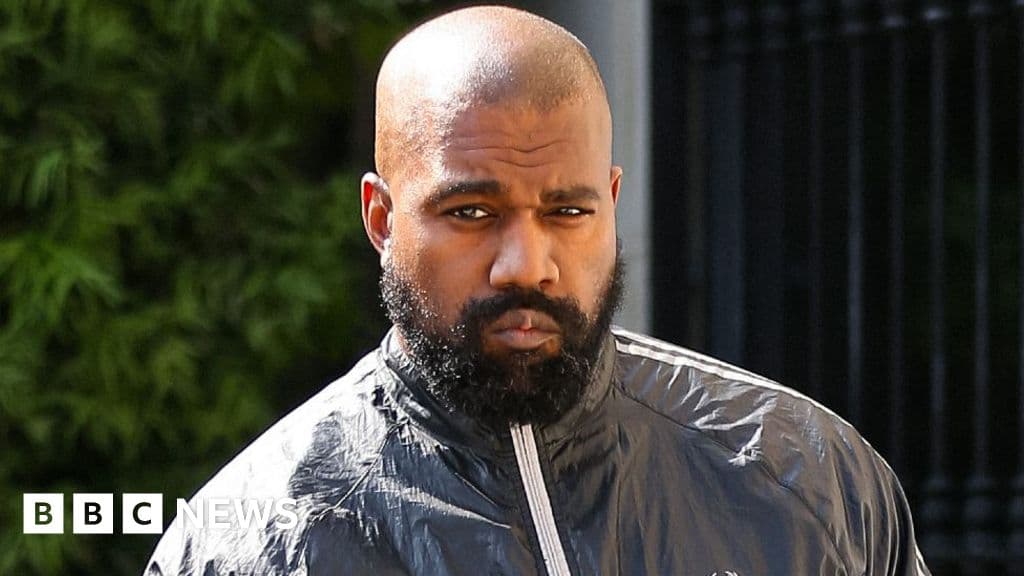
Model Jennifer An claims Kanye West choked her on set, leaving her scared.

Thirty-two charities in England and Wales have donated over £28 million to illegal Israeli settlements, according to MP Melanie Ward. If gift aid is claimed, taxpayers could subsidize these settlements by £5.6 million, prompting an investigation by the Charity Commission.

UK's leading science facilities face closure due to £162m funding crisis.

A poll shows that 55% of Makerfield voters would be less likely to support a candidate with offensive social media posts. Only 31% said such posts would not affect their voting decision.
See every story in News — including breaking news and analysis.
Prof Rosie Woodroffe, of the Institute of Zoology, who works with farmers on vaccinating badgers, said: “Badgers are not driving this epidemic. They’re not a reservoir of disease but they’re also not irrelevant to TB eradication. So the strategy proposes badger vaccination in priority areas.”
The badger cull is already over across the vast majority of England, she said, with one last licence in Cumbria. The government has pledged to end the cull by 2029.
The effectiveness of the badger cull is contested. Wood said it was implemented at the same time as better biosecurity on farms and better BTB testing. “A [2025] review suggested there was an effect of culling, but it’s impossible to know exactly the size of that effect,” he said.
Cross said: “If you’ve got a destination and you’ve got a real time limit to the journey [to eradication], it’s best you don’t drive looking in the rear-view mirror. It’s got to be about the pathogen, not the politics.”
Paul Tompkins, the deputy president of the National Farmers’ Union, said: “BTB continues to devastate farming families and their herds. That’s why this strategy is so important and we back its goal of building on the progress achieved so far. We now need some real urgency behind its delivery.”