
US charges Cuba's Raúl Castro with murder over 1996 downing of two planes
Raúl Castro charged with murder by US over 1996 plane downing, reviving old charges.
BBC News1 min read

The CEO of Marks & Spencer criticized the government's proposal for voluntary food price caps as 'completely preposterous', advocating instead for reduced taxes and regulatory burdens. He highlighted the financial struggles retailers face with essential items like milk and bread.
Mentioned in this story
The boss of Marks & Spencer has called a government proposal for voluntary price caps on essential food items “completely preposterous”, saying it should reduce tax and regulatory burdens instead.
Stuart Machin, the chief executive of the clothing, homewares, food and beauty retailer, said M&S already lost money on some basic items such as milk, bread and baked beans and made very slim profits on other products such as eggs and sugar.
“I don’t think government should be trying to run business,” he said. “They should try to understand business better. There is so much in the government’s control. My advice is to try to reduce tax and regulatory burden and free us up in a very competitive market.”
It emerged on Tuesday that government officials had raised the idea with supermarkets that they should stock at least one version of basic items such as bread, milk and butter at a set low price in exchange for an easing of some regulations on issues such as packaging and healthy food.
Machin said retailers were facing “a triple whammy of headwinds with increased taxation, a greater regulatory burden and ongoing global conflict” and ministers “can do things to relieve some pressure and help retailers grow and invest”.
He said a “big headwind” was higher taxes, with £40m in additional costs from April’s new packaging levy and potentially a further £10m this year as well as £50m higher costs from national insurance changes or up to £100m if the higher costs from suppliers’ need to pay extra national insurance were included.
Machin said the additional cost from new regulations and additional taxes “does all link to employment”, putting a dampener on businesses’ ability to take on more people. He said most of the taxes had been known about, and so M&S had planned in ways to cut costs and offset the impact.
However, he said the unexpected Middle East conflict had already prompted some suppliers to ask for higher prices, adding “a few million” pounds to M&S costs. Machin said M&S was able to absorb or offset most of this.
The chief executive was speaking as M&S pledged to invest in technology and 18 new food stores after annual results revealed last year’s paralysing cyber-attack had knocked almost a quarter off its profits.
Machin said the year ahead would be “one of the most important … in our history” as it added automated distribution centres, refurbished clothing departments and used AI to sharpen marketing and product sourcing.
The M&S CEO called the government's proposal for voluntary food price caps 'completely preposterous'.
He believes the government should focus on reducing tax and regulatory burdens rather than trying to control business operations.
Retailers are dealing with increased taxation, greater regulatory burdens, and ongoing global conflicts, which are impacting their profitability.
M&S mentioned losing money on basic items such as milk, bread, and baked beans.
Raúl Castro charged with murder by US over 1996 plane downing, reviving old charges.

Young Americans demand court halt to Trump's pollution rollbacks

James Murdoch to acquire New York Magazine and Vox Media Podcast Network for over $300 million.
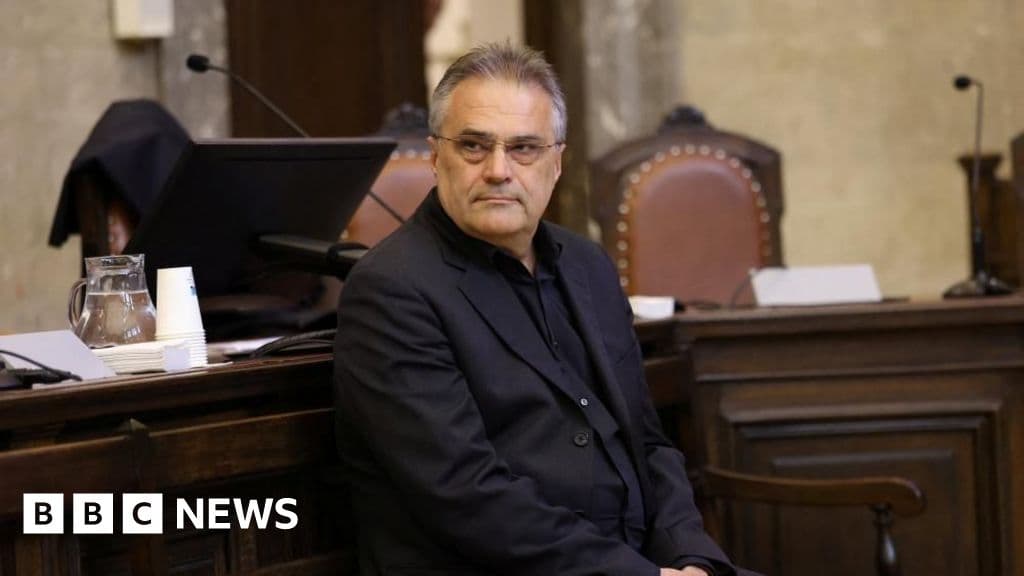
Egisto Ott, former Austrian intelligence officer, convicted of spying for Russia.

Michael Bay set to direct a film on US military rescue mission in Iran
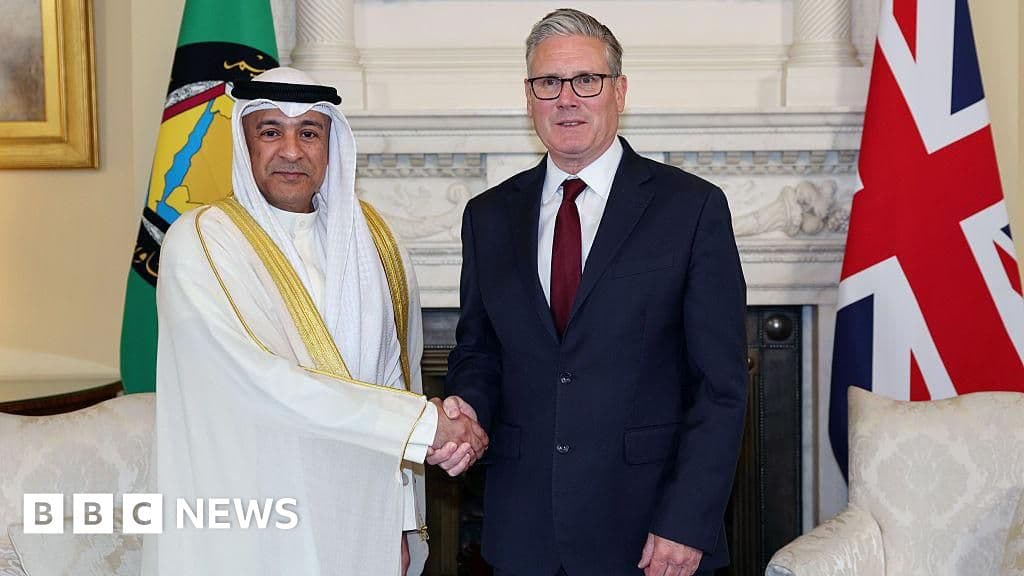
UK finalizes a £3.7bn trade deal with six Gulf states, removing tariffs and boosting business.
See every story in News — including breaking news and analysis.
“The next three years are critical for M&S as we invest for growth,” he said.
Archie Norman, the retailer’s chair, said now was the time to “shake the dust off our heels” as the effect on the availability of products after the cyber incident that began last Easter was “now tapering” and new ranges were “resonating well with customers”.
The pledge came as M&S revealed underlying profits slumped by 23.8% to £671m in the year to 28 March as sales rose only 1.9% to £14.2bn despite widespread inflation of more than 3%. Profits were hit by £131.3m of costs related to the cyber incident.
Food sales rose 7% but fashion, homewares and beauty sales were down by 7.7% and international sales were down 7.2% as the fallout from the cyber-attack rolled on through the year.
However, analysts said the outlook on profits was worse than expected as M&S said the year ahead would be affected by “higher fuel, freight and input costs and continued government tax levies and regulatory headwinds”.
Analysts at Jefferies said M&S was only guiding to an expected annual profit of more than £876m in the year ahead against expectations of £964m.
Alison Dolan, the chief financial officer at M&S, said the flow of stock had been “materially disrupted” by the incident, putting pressure on the supply chain and hitting availability throughout the year, so the retailer was left with excess stock that it was forced to discount more than planned in the second half.
Machin said food sales had grown strongly, helping M&S reach 4.1% market share – its highest level ever – and it would be 4.6% if M&S’s sales via its Ocado online grocery joint venture were included.
M&S sold £1bn of goods via the online grocer for the first time this year, helping Ocado reach an operating profit of £15.2m – a return to the black after several years of losses.
Machin said Ocado had improved efficiency but there was “much more to do before we commit to future growth investment”.