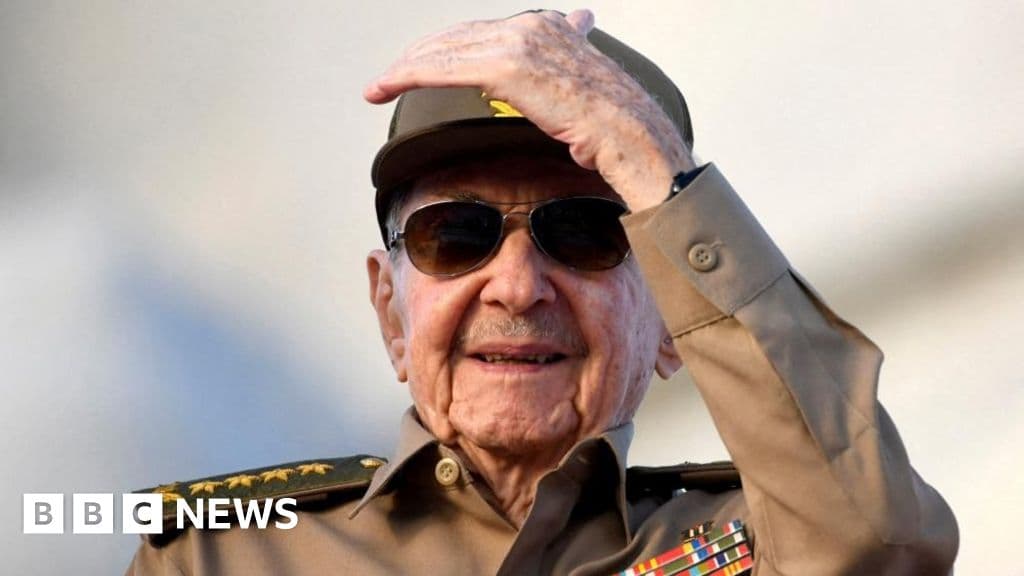
US charges Cuba's Raúl Castro with murder over 1996 downing of two planes
Raúl Castro charged with murder by US over 1996 plane downing, reviving old charges.
BBC News1 min read

Bolivia's President Rodrigo Paz is facing a crisis as protests and blockades have besieged La Paz, leading to empty markets and depleted hospital resources. At least three deaths have been reported due to blocked emergency services.
Mentioned in this story

Demonstrators run across a street during an anti-government protest in La Paz, Bolivia, Monday, May 18, 2026. Freddy Barragan/AP
Freddy Barragan/AP
LA PAZ, Bolivia — Bolivia's President Rodrigo Paz faces a deepening crisis as widespread protests and blockades leave the political capital under siege less than six months after he took office.
Two weeks of road closures — spearheaded by the Bolivian Workers' Central, COB, peasant unions and miners — have emptied markets in La Paz and depleted vital hospital oxygen reserves. The government reported that at least three people died after emergency vehicles were blocked from reaching medical centers.
On Monday, supporters of Bolivia's influential ex-President Evo Morales clashed with police in the capital city as they joined multiple sectors demanding the resignation of the president, who lacks both a legislative majority and a robust political party to anchor his administration.
The unrest presents the biggest challenge yet for Paz, a business-friendly centrist who came to power six months ago as a wave of conservative electoral wins swept the region.
"Those seeking to destroy democracy will go to jail," Paz warned on Friday, even as the blockades expanded to engulf nearly the entire country.
The COB began by demanding wage increases, while peasant unions demanded a steady supply of gasoline. The miners, meanwhile, are negotiating separately for access to additional mining areas. Public schoolteachers are also holding separate talks regarding salary improvements.
"These demands have been largely addressed in a manner consistent with current realities; however, there are dark forces seeking to destabilize our democracy," said presidential spokesperson José Luis Gálvez, in an allusion to influential former President Evo Morales.

The protests in La Paz were caused by widespread discontent led by the Bolivian Workers' Central and various unions, resulting in road closures and blockades.
The protests have led to depleted hospital oxygen reserves and at least three deaths due to emergency vehicles being blocked from reaching medical centers.
The protests are primarily led by the Bolivian Workers' Central (COB), peasant unions, and miners.
The protests have emptied markets in La Paz, severely impacting the local economy and access to essential goods.
Raúl Castro charged with murder by US over 1996 plane downing, reviving old charges.

Young Americans demand court halt to Trump's pollution rollbacks

James Murdoch to acquire New York Magazine and Vox Media Podcast Network for over $300 million.
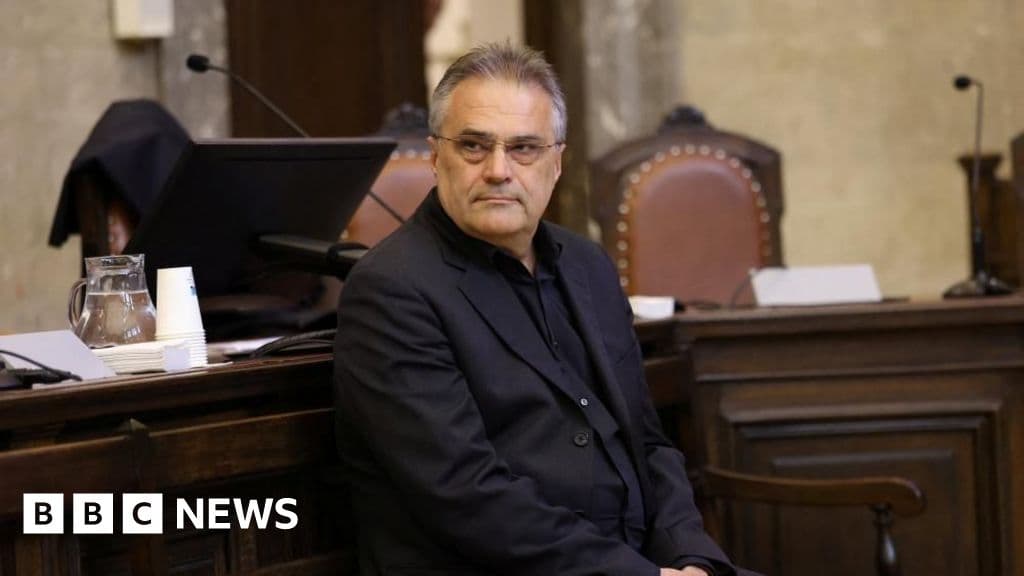
Egisto Ott, former Austrian intelligence officer, convicted of spying for Russia.

Michael Bay set to direct a film on US military rescue mission in Iran
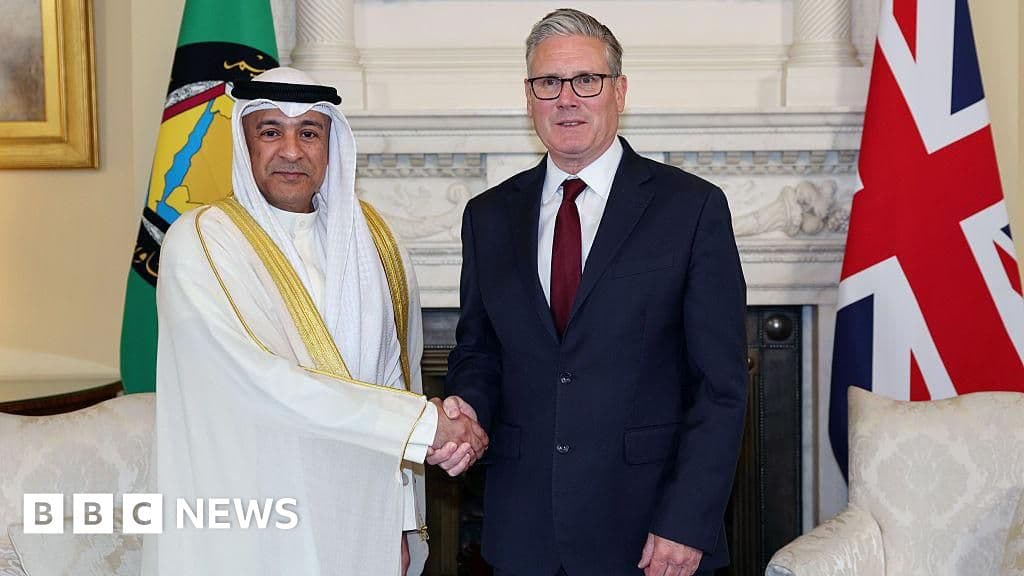
UK finalizes a £3.7bn trade deal with six Gulf states, removing tariffs and boosting business.
See every story in News — including breaking news and analysis.
Anti-government protesters standing in a field are silhouetted against clouds of tear gas launched by police, near El Alto, Bolivia, Saturday, May 16, 2026. Juan Karita/AP
Juan Karita/AP
Paz reiterates that he inherited a "bankrupt state," yet his adversaries reproach him for his sluggish response to the worst crisis in 40 years — marked by fuel shortages and an inflation rate that hovered near 20% last year.
According to business organizations, ongoing protests and road blockades are draining more than $50 million per day from Bolivia's economy and have left roughly 5,000 vehicles stranded on the highways.
Morales marshaled the latest march from his hideout in Bolivia's remote tropics. He has been holed up in the highlands for the past year and a half, evading an arrest warrant on charges relating to his alleged sexual abuse of a 15-year-old girl. He says the allegations are politically motivated.
The Movement Toward Socialism, MAS, which had governed Bolivia for the past two decades under Morales and later Luis Arce, suffered a historic defeat in last year's elections following a bitter feud between the two former leaders.
"The government and the right wing claim that I am a political corpse and that I lack the ability to mobilize anyone, yet they continue to blame me," Morales said recently on X. "As long as structural demands — such as those concerning fuel, food and inflation — remain unaddressed, the uprising will not be quelled."
Despite his fiery rhetoric, analysts believe Morales no longer has the power to rally mass support, suggesting instead that he is fueling the protests purely to evade justice.
The collapse of the MAS era left the Bolivian political landscape deeply fractured, with no single party emerging as a dominant force.
Paz secured a surprise electoral victory, but the Christian Democratic Party — the vehicle for his rise to power — quickly fractured within the legislature. Meanwhile, the president remains locked in an open feud with his vice president, former police officer Edman Lara.
Paz began his term with vigor, reaching out to the international community to break the isolation that had characterized the MAS era. While his efforts secured various pledges of investments and loans, many of these funds have yet to materialize.

Police officers detain a demonstrator during an anti-government protest in La Paz, Bolivia, Monday, May 18, 2026. Freddy Barragan/AP
Freddy Barragan/AP
As a first measure, he put an end to fuel subsidies, which drove up the prices of gasoline and diesel — yet without triggering protests among a population weary of previous shortages. However, the government imported low-quality gasoline, which sparked protests among transport workers over damage to their vehicles.
The "junk gasoline" scandal triggered a wave of strikes and protests among transportation workers and the resignations of two high-ranking officials at the state-owned oil company.
The ongoing protests and blockades in Bolivia worry the wider region.
Eight allied Latin American governments, from Chile to Costa Rica, recently released a joint statement rejecting "any action aimed at destabilizing the democratic order." Neighboring Argentina said it would start a weeklong humanitarian airlift to alleviate shortages in the country.
The United States, now rebuilding relations with Bolivia after years in which Morales defined the country in opposition to Washington, said it supported Paz's efforts "to restore order for the peace, security and stability of the Bolivian people."
On Tuesday, U.S. Deputy Secretary of State Christopher Landau said on X that he spoke with Paz to affirm U.S. support for Bolivia's legitimate government. Landau also condemned the organizers of blockades and riots, claiming without evidence that they have the backing of organized crime and drug traffickers.