
Families mark a year of Air India crash with vigils and prayers
One year since the Air India Flight 171 crash, families hold vigils and prayers.
BBC News1 min read

Barclays is reducing lending to risky borrowers following a £228m loss from the collapse of mortgage lender MFS, which is under investigation for fraud. The bank's total credit impairment charges rose to £823m in Q1 2026, up from £643m a year earlier.
Mentioned in this story
Barclays is pulling back from lending to risky borrowers, as its chief executive warned of increasing numbers of fraud cases and the bank took a £228m hit from the failure of a mortgage lender.
The mortgage lender Market Financial Solutions (MFS) collapsed in February amid allegations of fraud and the UK’s financial regulator has since launched an investigation into the scandal.
Barclays provided banking services to MFS and said the £228m hit had pushed total credit impairment charges to £823m in the first three months of 2026, up from £643m a year earlier.
Last year, the British bank reported a £110m loss over the US sub-prime auto lender Tricolor, which collapsed amid fraud allegations.
The chief executive, CS Venkatakrishnan, said: “This [alleged] fraud, as with the one in Tricolor, indicates to us the importance of strong financial controls at borrowers and the difficulty ex-ante of identifying fraud.
“As such, we are constraining lending to certain structured finance counterparties who operate more vulnerable business models and cannot convince us of the quality and independence of their financial controls.”
Losses stemming from the collapse of MFS, Tricolor and the US auto parts company First Brands (with allegations of fraud or mismanagement in all three cases) have raised fears over lending standards in the $2tn private credit industry, which has come under greater scrutiny from regulators. There are concerns that the fallout could destabilise traditional banks that issue loans to the shadow banking sector.
Andrew Bailey, the governor of the Bank of England and chair of the Financial Stability Board, has described it as a “relatively opaque world” and stressed the need for transparency and solid stress testing, because otherwise people might lose faith in the financial system as a whole.
Venkatakrishnan added: “These things will only continue to increase in frequency … so it is important to have strong defences,” he added. “The incidence of fraud depends on the weakness of the economic cycle, because if you’re operating a more vulnerable business model, your, incentive structure changes, if the market becomes weak.”
Barclays also set aside a further £105m for compensating customers in the UK’s , increasing its provision to £430m. Its pre-tax profit in the first quarter rose 3% to £2.8bn, with revenues up 6% at £8.2bn.
Barclays is cutting back on risky lending due to increasing fraud cases and a £228m loss from the collapse of mortgage lender Market Financial Solutions.
Barclays incurred a £228m loss from the collapse of Market Financial Solutions (MFS).
Barclays' total credit impairment charges reached £823m in the first three months of 2026.
The UK’s financial regulator has launched an investigation into Market Financial Solutions amid allegations of fraud.
One year since the Air India Flight 171 crash, families hold vigils and prayers.
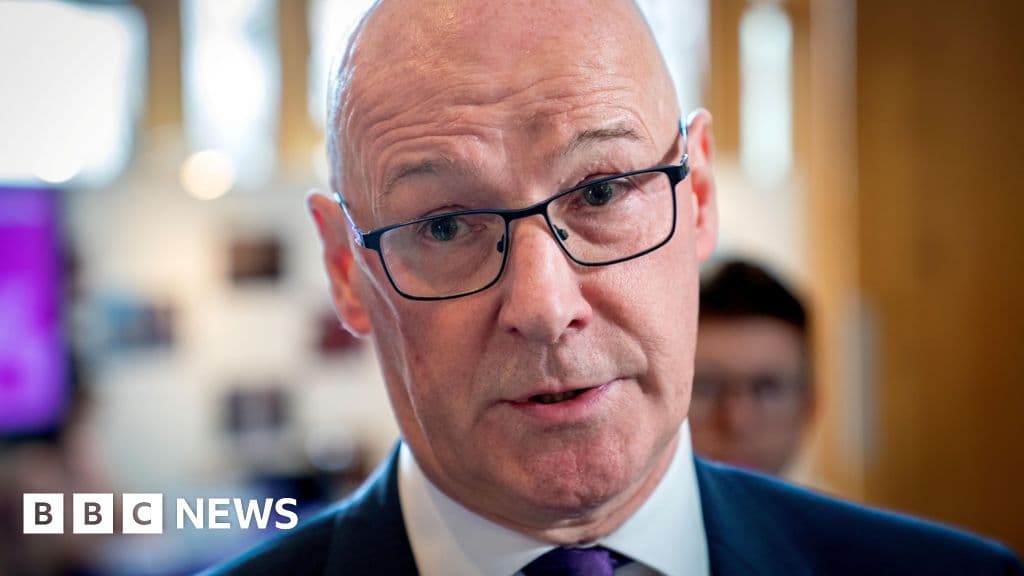
Israeli tech firm BlackCore allegedly targeted John Swinney with disinformation ahead of the Holyrood election.

Keir Starmer insists he's not going away after defence secretary's exit.

Trump claims a US-Iran deal is imminent, potentially ending Gulf conflict.

Southwark Council has taken possession of a property linked to Sierra Leone's First Lady, Fatima Bio, after a year-long investigation. This follows her recent comments about the property during a BBC interview.

Massive fire at California warehouse complex leads to evacuations
See every story in News — including breaking news and analysis.
Quarterly income from investment banking topped £4bn for the first time, driven by 16% growth in equities income after trading volatility since the start of the Iran war on 28 February.
Venkatakrishnan warned of a broader impact of the rise in energy prices if the war dragged on. “Higher oil prices and the longer they go on will have an impact on the economy,” he said. “And we do care. We’ve not seen anything particularly yet in terms of credit weakness. But what you’ve seen is that the inflation print in the UK has gone up.”
Later on Tuesday, Barclays will begin offering debit card holders 5% cashback on fuel at Tesco pumps, up to £10 a month. “This is our way of trying to recognise the concern that motorists have at the petrol pump,” he said.
The bank’s chief financial officer, Anna Cross, said businesses were in “good shape” and there had been no credit deterioration in companies or consumers.
Consumers have responded to the Middle East war by prioritising essential spending and repaying more credit card debt, she said, “it’s the rational thing for consumers to be doing in this environment”.
Venkatakrishnan defended the bank’s trading performance against that of Wall Street banks, describing it as “middle of the pack”. He pointed out that Barclays had no commodities business, while US banks benefited from commodities trading amid the Middle East conflict.
Will Howlett, a financials analyst at the UK the wealth manager Quilter Cheviot, said: “Barclays posted a solid, if slightly messy, first quarter, with a strong underlying performance partially obscured by one off issues.”