
Russian attacks on Ukraine’s Kyiv kill at least four people
At least four dead in Russian missile and drone attack on Kyiv
Al Jazeera English1 min read

Attacks on Ebola health facilities are escalating in eastern DRC as the WHO warns of a potential outbreak worsening in DRC and Uganda. Local residents are demanding the bodies of Ebola victims, leading to violent incidents at health centers.
Mentioned in this story
Goma, Democratic Republic of the Congo – Attacks on Ebola health facilities are intensifying in the eastern Democratic Republic of the Congo (DRC) as the World Health Organization warns the outbreak could worsen in the DRC and Uganda
On Thursday, the Rwampara health centre was stormed by a group of angry residents demanding the bodies of relatives who had died from Ebola, according to local sources. The incident was also confirmed by partners of the Congolese government involved in the response in the area.
A day later, a tent provided by Doctors Without Borders, also known by its acronym MSF, at a hospital in Mongbwalu in Ituri province was set on fire.
“Following the death of a patient showing symptoms of Ebola virus disease in one of the tents, healthcare staff isolated the body in line with strict health protocols,” the NGO Alliance for International Medical Action (ALIMA) said in a statement sent to Al Jazeera.
It said that while the body was being prepared for burial, tensions flared, resulting in the burning of two tents.
“Despite this incident, the teams were also able to secure the body of the deceased patient in preparation for a dignified and safe burial, in accordance with Ebola response standards,” ALIMA added.
Health workers in Ebola-hit areas of the eastern DRC have repeatedly faced resistance from communities over strict burial protocols, which require specialised handling of bodies to prevent further transmission of the virus. Aid agencies said the tensions are often driven by fear, rumours and mistrust of medical teams.
“Some people here believe that Ebola is a business,” said Gloire Idriss, a resident of Rwampara who witnessed the scene. “When healthcare providers refuse to hand over the bodies of those who have died from Ebola, people think they might be trafficking their organs.”
The Congolese health minister has said the bodies of Ebola victims remain highly contagious and must be handled only by trained teams in protective gear.
“Let us bury the deceased safely,” Roger Kamba told Radio France Internationale. “The dead must not take others with them into the grave.”
![A health worker wearing protective equipment prepares disinfectant materials as she gets ready to disinfect the isolation area for Ebola patients at the General Referral Hospital of Mongbwalu in Mongbwalu [AFP]](/_next/image?url=https%3A%2F%2Fwww.aljazeera.com%2Fwp-content%2Fuploads%2F2026%2F05%2Fafp_6a12a6fd01bd-1779607293.jpg%3Fw%3D770%26resize%3D770%252C513%26quality%3D80&w=3840&q=75)
The attacks are driven by local residents demanding the bodies of relatives who died from Ebola, leading to violent confrontations with healthcare providers.
The WHO has issued warnings that the Ebola outbreak could worsen in both the Democratic Republic of the Congo and Uganda.
Recent incidents include a storming of the Rwampara health center by residents and the burning of a Doctors Without Borders tent in Mongbwalu.
Healthcare staff are isolating bodies of patients showing symptoms of Ebola virus disease in accordance with strict health protocols.
At least four dead in Russian missile and drone attack on Kyiv

A UK judge decided not to jail two teenage boys for raping two girls, leading one victim to express her outrage, calling the decision a 'rock straight in my face'. The boys received youth rehabilitation orders instead, with their sentences subject to review.

Knicks defeat Cavaliers 121-108, one win away from NBA Finals!
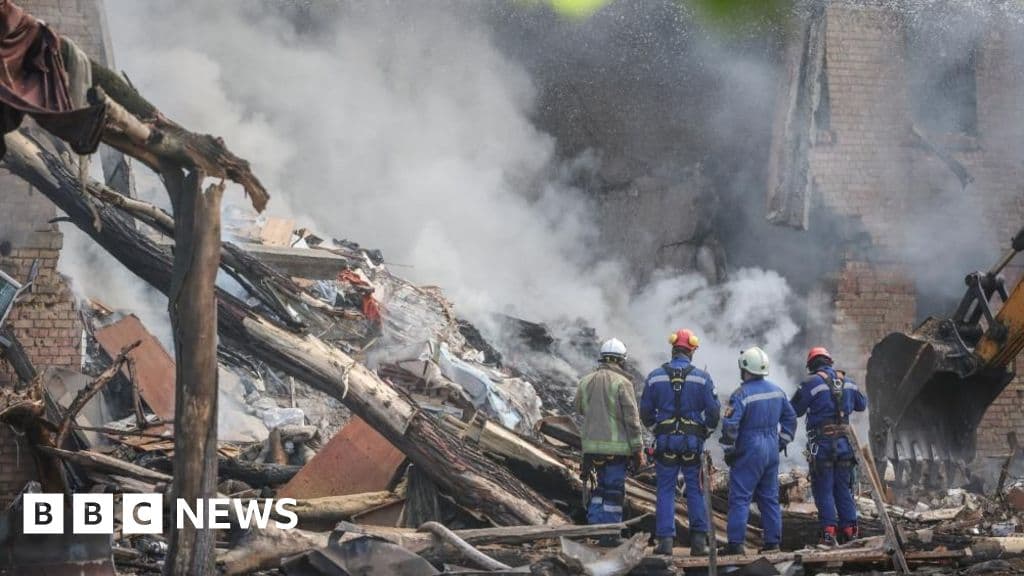
Four dead and dozens injured in Russian missile and drone strikes on Kyiv.

Treasury turns down proposal to lower VAT on public EV chargers to 5%

Usyk avoids upset with late stoppage of Verhoeven in Egypt
See every story in News — including breaking news and analysis.
A health worker wearing protective equipment prepares disinfectant materials as she gets ready to disinfect the isolation area for Ebola patients at the General Referral Hospital of Mongbwalu in Mongbwalu [AFP]
In the eastern DRC, it is customary for relatives and neighbours to gather at the home of the deceased to pay their last respects, and some mourners touch the body as a final act of farewell.
“When my daughter died of Ebola last month, the medical team came to bury her. We didn’t get to say our final goodbyes. It still upsets me that I had to watch her funeral helplessly without our cultural rites,” said Lokana Jean, a 40-year-old resident of Mongbwalu.
“Under normal circumstances, I would have held her close and felt her final warmth,” he told Al Jazeera.
As of Saturday, nearly 180 people had died from the disease and close to 800 cases had been recorded, according to the Congolese Ministry of Public Health.
Authorities in Ituri have introduced measures to try to slow transmission, including limits on public gatherings, suspension of wake services and a ban on moving bodies between locations.
Rodriguez Kisando, a doctor specialising in health and the environment, said violence targeting Ebola treatment facilities is being driven by rumours and misinformation.
“When an epidemic breaks out, rumours spread quickly. If accurate information is not shared fast, people will believe anything, and that is when violence takes hold,” he told Al Jazeera.
He warned that attacks on treatment centres along with patients fleeing before completing care could speed up the spread of the disease.
“As long as there are scenes of violence and sick people escape from Ebola treatment centres before they are cured, the disease will continue spreading. This is extremely serious,” he said.
![Residents gather to inspect the remains of Residents gather to inspect the remains of a burnt medical tent at the General Referral Hospital of Mongbwalu [AFP]](/_next/image?url=https%3A%2F%2Fwww.aljazeera.com%2Fwp-content%2Fuploads%2F2026%2F05%2Fafp_6a12a7435dcd-1779607363.jpg%3Fw%3D770%26resize%3D770%252C513%26quality%3D80&w=3840&q=75)
Residents gather to inspect the remains of a burnt medical tent at the General Referral Hospital of Mongbwalu [AFP]
Amid a sharp decline in international aid, Congolese authorities said the national treasury is covering a large share of the response, and shortages are becoming more visible.
ALIMA said resources for detecting, treating and preventing Ebola remain severely inadequate and called for more international support.
A senior Congolese official involved in the response in Rwampara, speaking on condition of anonymity, said treatment centres were overwhelmed.
“We are receiving new confirmed cases almost every day. The resources we have are not enough for the scale of the outbreak,” he said.
Authorities in Ituri and North Kivu are urging residents to wash their hands regularly, keep their distance from the sick, cook food thoroughly, avoid self-medication and trust response teams.
The Africa Centres for Disease Control and Prevention has placed 10 African countries on high alert: South Sudan, Rwanda, Kenya, Tanzania, Ethiopia, the Republic of Congo, Burundi, Angola, the Central African Republic and Zambia.
The DRC, Uganda and South Sudan have agreed to strengthen cross-border coordination, including surveillance, early warning systems, border monitoring and improved laboratory and response capacity.