
Supreme Court prohibits Alabama from using nitrogen gas for execution
Supreme Court denies Alabama's request to use nitrogen gas for executions
NPR Topics: News1 min read
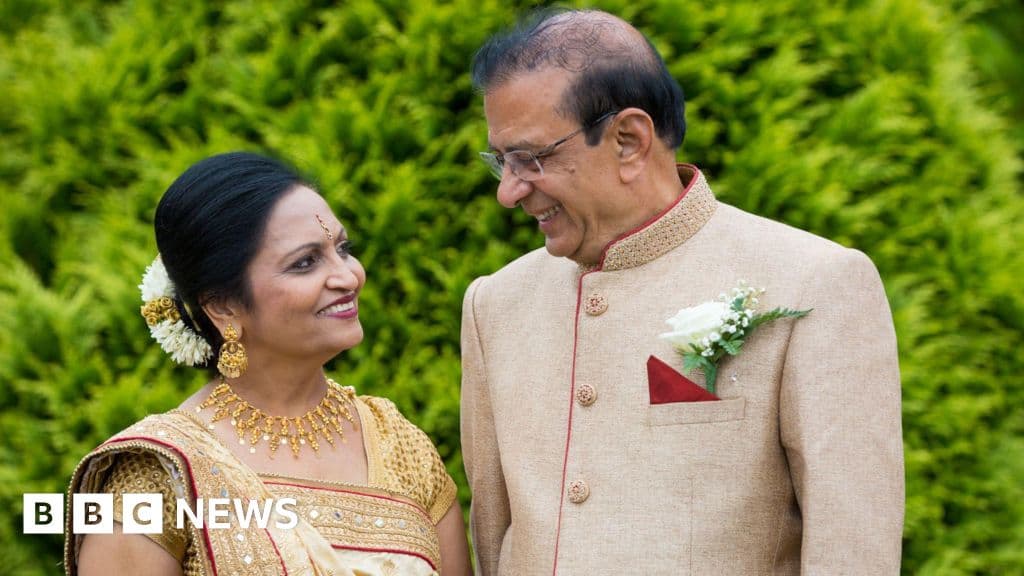
Families of Air India crash victims are struggling to identify remains a year after the tragedy. Miten Patel recounts his experience in Ahmedabad, where he provided dental records to aid in the identification process.
Miten Patel remembers the day hospital staff in Ahmedabad drew two vials of his blood to help identify his parents.
He had landed in the Indian city hours earlier with his brother, carrying dental records for Ashok and Shobhana Patel.
"We had to fly Air India to get there, because there were no other flights," he said.
Miten didn't know anyone in India. But he was grateful that his parents had taught him Gujarati, the local language in Ahmedabad. It gave him and his brother the means to navigate the chaotic aftermath of the tragedy that changed their world.
"I didn't even know what the word repatriation meant."
A year ago, on 12 June, his parents were flying home to London when their Air India flight crashed just 32 seconds after take-off from Ahmedabad. They were among 260 people - 241 on the plane and 19 on the ground - who were killed in one of the worst aviation accidents in India's history. One passenger miraculously survived the crash.
It took more than a week for the Patels' remains to be returned to the UK.
Four days later, Miten received a call in the morning from police in London. They asked to meet him that evening, refusing to tell him the reason over the phone.
A CT scan had revealed that his mother's casket also contained the remains of someone else. Miten was told there were additional "skeletal parts".
Police asked Miten not to tell anyone, not even his family, for weeks.
He insisted on meeting the coroner.
"I said to them, look, I would sincerely request that you separate my mother from whoever else," he said.
Further testing showed that his mother's remains had been mixed with those of an unidentified man.
The Patel family waited another month before they could cremate her remains, postponing Ashok's last rites so they could be done together.
A UK inquest has been opened into the death of the man in Shobahana Patel's casket, who still hasn't been identified.
In a hearing this week, UK Coroner Fiona Wilcox said that they had "sent palm prints and DNA to India in an attempt to identify this gentleman but to date we have had no confirmation as to his name". She added that it was "obviously very unusual" to open inquests nearly a year after the death.
"The identity of the unidentified male remains outstanding. I hope that identification will be forthcoming," Wilcox added.
The challenge for emergency workers at the crash site was immense, with hundreds of casualties, and many bodies burned and torn apart.
The wreckage was scattered across 37,000 sq m, the equivalent of five football pitches, as the plane collided with , and broke apart.
Families are struggling with the lengthy process of identifying remains, requiring dental records and DNA tests.
Miten Patel provided dental records and underwent blood tests to help identify his parents after the crash.
Miten Patel used Gujarati, the local language, which his parents had taught him.
Miten Patel had to fly Air India because there were no other available flights to reach Ahmedabad.
Supreme Court denies Alabama's request to use nitrogen gas for executions
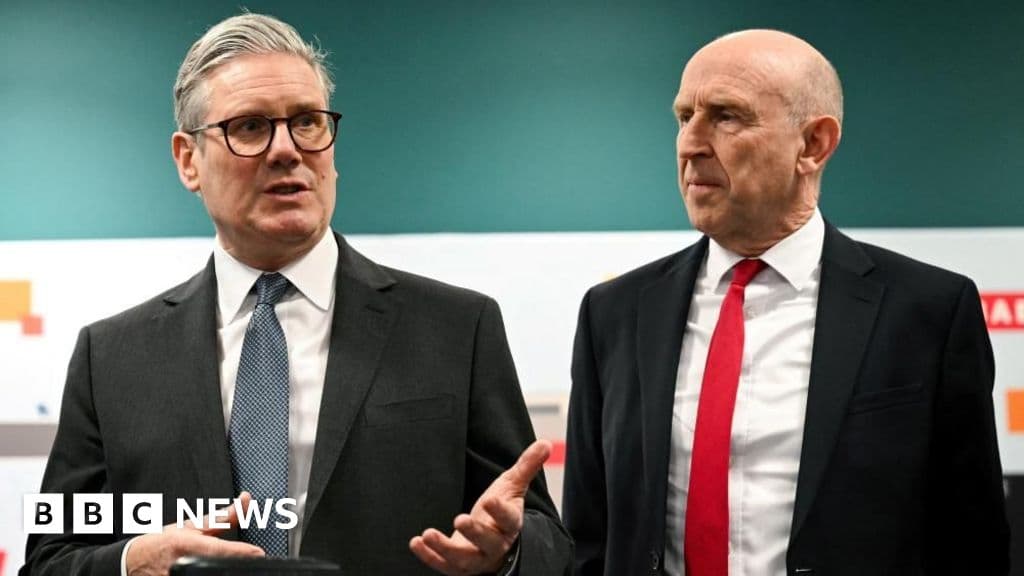
Dissent bubbles up again in the Labour Party as concerns grow over Starmer's leadership.

Princess Bajrakitiyabha of Thailand has passed away at 47 after years in a coma.

Trump's board makes last-ditch effort to retain his name on Kennedy Center facade before court deadline.
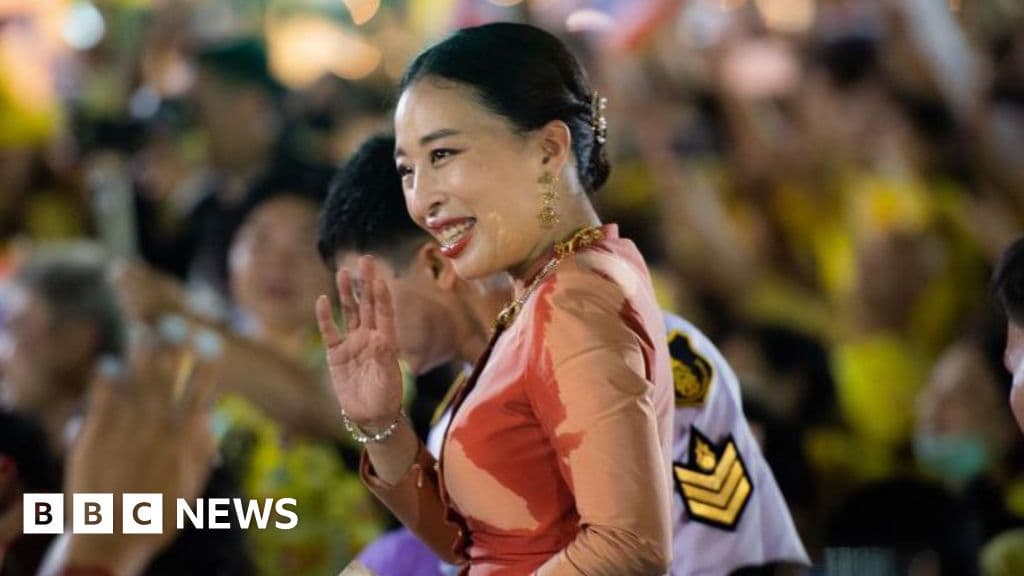
Thai Princess Bajrakitiyabha has passed away after being in a coma for over three years.

California officials recover body of five-year-old swept out to sea
See every story in News — including breaking news and analysis.
One local resident who had rushed to help described struggling to pull out bodies from the debris, with seatbelts that were too hot to touch strapping the victims in.
An independent forensic expert deployed to identify victims of the crash, Dr Deepak Venkatesh, told the BBC that the scale of the disaster made identifying the victims even harder.
The bodies of 90% of those killed were severely charred, and "extreme thermal damage destroyed fingerprints, facial features and other visual identifiers", according to India's National Disaster Management Authority (NDMA).
The NDMA has since drawn lessons from the Air India crash and used it as a case study in new identification guidelines issued in January.
"It's a lesson learned," Dr Venkatesh told the BBC.
The BBC contacted the Indian foreign ministry, the hospital responsible for the identification process in Gujarat and the UK foreign office but has received no responses.
In July last year, about a month after the crash, the Indian foreign ministry told the BBC that it had "been working closely with the UK side from the moment these concerns and issues were brought to our attention".
The statement continued: "In the wake of the tragic crash, the concerned authorities had carried out identification of victims as per established protocols and technical requirements.
"All mortal remains were handled with utmost professionalism and with due regard for the dignity of the deceased."
There is at least one other case in the UK where a family received the wrong remains.
Amanda Donaghey returned to the UK believing she was carrying the remains of her son, 39-year-old Fiongal Greenlaw-Meek. She later discovered she had received the remains of 70-year-old Indian woman, Vasuben Narendrasinh Raj.
This week, Wilcox, the UK coroner, said they had "only recently been able to make contact with the son of Ms Raj".
Donaghey is still in search of her son's remains.
James Healey-Pratt, a lawyer representing both Donaghey and Miten Patel, told the BBC that while the scale of the disaster created identification challenges, "there still needs to be transparency and accountability, because the families deserve it".
He added that throughout this past year, "at no stage has anybody in India in a position of authority accepted responsibility".
"It's highly embarrassing, and it makes them look incompetent."
Dr Venkatesh was deployed days after the crash to help identify remains. He described scenes that still haunt him.
For months, teams searched through rubble and debris, in temperatures reaching the mid-40s Celsius, surrounded by decomposing remains.
He told us body parts were numbered and eventually sent to local laboratories for processing.
Families were asked whether they wanted the entire body of their loved one returned to them, a process that could take months longer as all remains were tested and matched.
At the time of the crash, the NDMA's focus remained on "relief, rescue and rehabilitation", according to Dr Venkatesh. In the immediate aftermath, emergency workers were focusing on saving lives, not identifying the bodies.
"The recovery environment presented challenges for maintaining the separation of remains, which can contribute to commingling," Dr Venkatesh said.
Commingling is when the remains of multiple individuals are mixed together. However, he is not aware of any cases where the families have challenged the identification of their relatives.
He said a "meticulous" and "systematic" search began after the initial emergency response, with teams dividing the crash site into separate zones.
The NDMA's updated guidelines in the wake of the crash acknowledged "Comprehensive Disaster Victim Identification and Management have not received adequate systematic attention in the disaster management framework so far".
While Dr Venkatesh said dental records are recognised globally as a fast and reliable way of identifying victims, authorities prioritised DNA verification instead based on their previous protocol.
That created a "bottleneck" at the forensic lab in Gandhinagar, near Ahmedabad, according to the updated NDMA guidelines. The report said "the sudden influx of challenging DNA samples strained the capacity" of the laboratory.
It concluded that India needed more regional DNA-testing facilities, as well as greater use of dental identification.
"The fight continues," Miten says. "At the end of the day, my mother came back home with somebody else."
Most of the time, Miten parks his grief. Then, at 11pm, he retreats to a room alone and watches videos of his late parents.
He believes the battle he is fighting, for himself and other families, is the least he can do to honour them.
"I don't want to die and meet my parents up there and they…" Miten pauses.
"I want them to say to me, Beta (son), we are so proud of you. You did everything you could after we went."
Additional reporting by Prem Boominathan in Ahmedabad