
‘There’s wee girls inside’: panic as masked men storm house in Belfast
Chaos in Belfast: Masked men storm house, claiming to 'liberate' it
The Guardian World1 min read

U.S. immigration policies are affecting the 2026 FIFA World Cup, with at least one Somali referee and an Iraqi team staff member denied entry. Additionally, numerous fans from countries like Morocco have been denied travel visas despite holding tickets.
Mentioned in this story

Media members tour the locker rooms at Kansas City Stadium ahead of the FIFA World Cup 2026 on June 8 in Kansas City, Mo. Jay Biggerstaff/Getty Images
Jay Biggerstaff/Getty Images
President Trump's restrictive immigration policies are already impacting this year's 2026 FIFA World Cup.
At least one referee from Somalia and one Iraqiteam staff member were denied entry at U.S. airports in recent days, and dozens of fans from countries such as Morocco have been denied travel visas, despite being ticket holders.
"I view the 2026 World Cup as a massive paradox," said Jules Boykoff, a professor and the author of Red Card: The 2026 World Cup, Sportswashing and the FIFA Greed Machine. "On one hand, it has more teams than ever participating. On the other hand, because of the policies of the Trump administration, it looks more like a World Cup of exclusion than inclusion."
Boykoff, who is also a former professional soccer player, told NPR he worries the restrictive immigration policies also will shape the experience of fans in the U.S., who might be anxious about potential tense interactions with immigration agents outside of stadiums.
Boykoff's concerns echo those of other policy experts and soccer fans who for months have warned about the influenceof President Trump's immigration policies on the tournament.
The White House did not respond to NPR's request for comment.
In a statement to NPR, Customs and Border Protection said "all travelers seeking entry into the United States, including athletes, coaches, and staff, are subject to CBP inspection and vetting."
The agency said "admissibility determinations are made on a case-by-case basis using law enforcement, national security, and immigration information available at the time of inspection."
There are 39 countries who are under either a full or partial U.S. travel ban. For 19 of those countries, the State Department has suspended issuing all visas. The Trump administration the move is to "ensure that individuals approved for a visa do not endanger national security or public safety."
President Trump's restrictive immigration policies are impacting the entry of officials and fans for the World Cup.
At least one referee from Somalia and one staff member from Iraq have been denied entry at U.S. airports.
Dozens of fans from countries such as Morocco have been denied travel visas despite being ticket holders.
The restrictive immigration policies could lead to reduced attendance and participation from international officials and fans.
Chaos in Belfast: Masked men storm house, claiming to 'liberate' it

House approves $70 billion for ICE and Border Patrol through Trump's term

Young men in Myanmar are being forcibly conscripted into the military amid civil war.
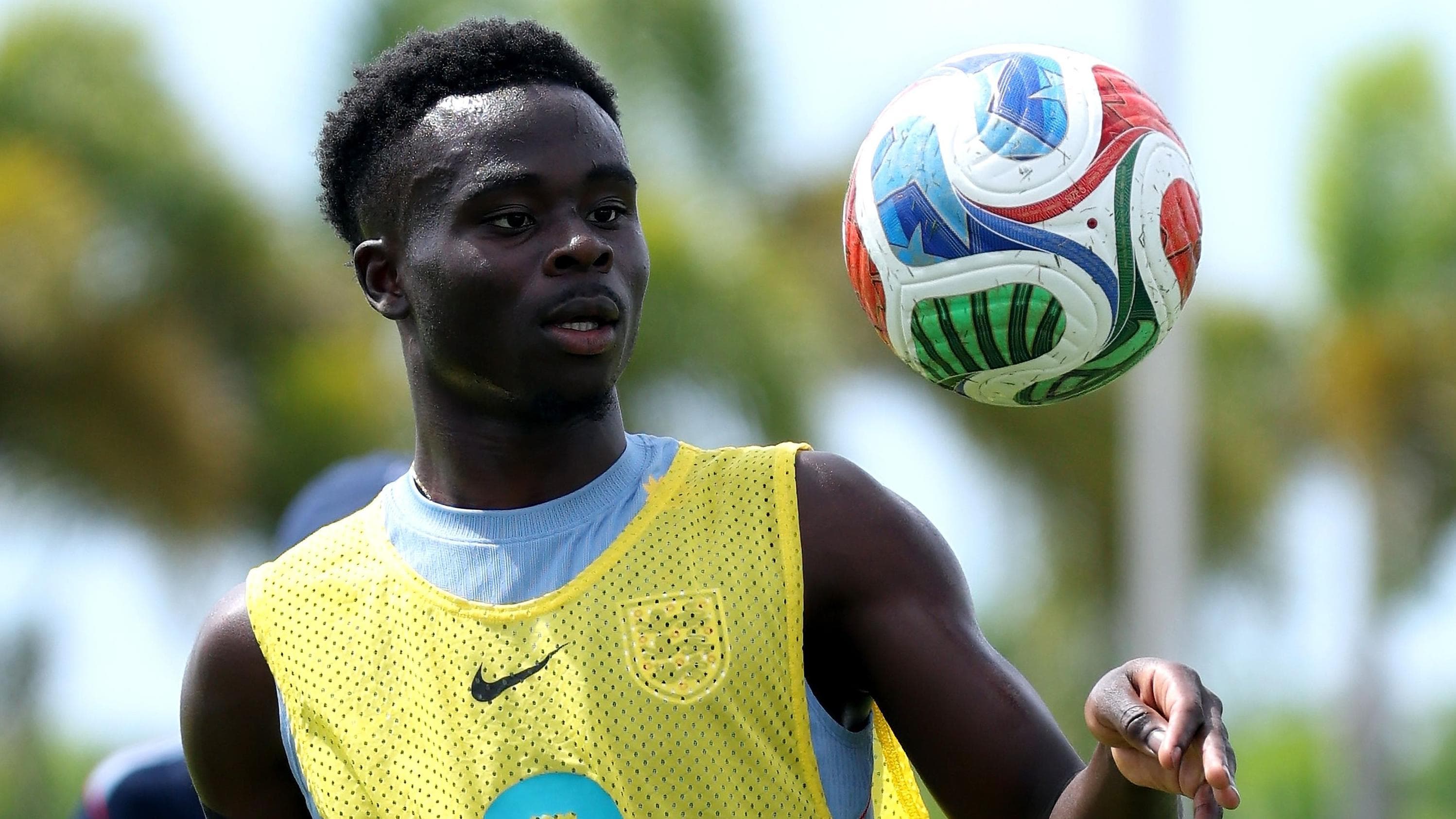
England's Tuchel carefully manages Saka's fitness ahead of the World Cup.

Canada confirms Gordie Howe Bridge opening despite Trump's threats

Australia's High Court to Decide on Damages for Indefinite Detention Case
See every story in News — including breaking news and analysis.
Four countries in those lists — Iran, Haiti, Côte d'Ivoire, and Senegal — are expected to play in the World Cup.
On Saturday, decorated FIFA World Cup referee Omar Abdulkadir Artan, of Somalia, was denied entry to the U.S. after landing at the Miami International Airport.
In a statement, CBP said Artan was "determined to be inadmissible due to vetting concerns and was denied entry." CBP did not say what concerns were.
Andrew Giuliani, the executive director of the White House Task Force for the World Cup, said Tuesday the denial was "for very good reasons," but he didn't provide any further explanation.
Artan did not respond to NPR's request for comment.
Meanwhile, a player for Team Iraq was questioned for hours at Chicago O'Hare International Airport. He was allowed into the U.S., but a photographer for the team was denied entry due to "vetting concerns," CBP said.
David Nevin, a University of Cincinnati professor who teaches a course on sports and politics, told NPR these immigration issues are a self-inflicted wound.
"When you insert politics into the competition, it's no longer the competition it was," Nevin said. "In some ways (it's) very tangibly when a referee is missing or a player is delayed."
The team from Iran — a countryat war with the U.S. and Israel — was forced to relocate its lodging to Mexico after the U.S. government said players and staff were banned from staying overnight.
Visas for team members were approved last week, but more than a dozen support staff did not get approval, including Mehdi Taj, the president of the Iranian football federation.
In response to a social media post by U.S. Ambassador to Turkey Tom Barrack, the Iranian Embassy in Turkey said the U.S.'s conduct "violates FIFA regulations and breaches the United States' host obligations."
The Iranians alsoaccused the U.S. of "politically biased interference in sport."
"The U.S. government in practice is depriving Iran's national team of its right to play in the World Cup under normal conditions and without undue pressure and stress," the post on X said.
Fans come from all over the world to attend the World Cup and cheer on their teams. Their chants and songs add to the excitement and vibrancy of the games.
But some fans and policy experts worrythis year's tournamentmay lose some of that exuberancy because of U.S.visa denials**.**
According to the Moroccan news website Hespress, more than 40 members of multiple Moroccan football team supporter associations have been denied visas to attend the tournament. Many had tickets to the games and hotel bookings.
Gianni Infantino, FIFA's president, in 2025 pushed against what he called "misconceptions" and said "everyone will be welcome in Canada, Mexico and the United States for the FIFA World Cup next year," and that the U.S. was committed to a smooth travel process, so fans from all over the world will be welcome."
But in response to Artan being denied entry to the U.S., a spokesperson for FIFA distanced the organization from the immigration issues. "FIFA is not involved in host country immigration processes, including visa adjudications, and has been informed by authorities that Mr. Artan's status will not be changed at present," FIFA said in a statement to NPR. "In line with previous FIFA events, a host government ultimately determines who receives a visa and who is admitted into their country.
Nevin called FIFA's new position "striking."
"FIFA has raised the surrender flag on this question," Nevin said. "They've taken this situation and basically deferred to the United States and said the United States can do as they see fit."