
A powerful US surveillance law is set to expire – what happens now?
Key FISA provision set to expire as Trump faces backlash over DNI appointment
The Guardian World1 min read

Israel is engaged in complex negotiations to resolve three overlapping wars in Iran, Lebanon, and Gaza, with U.S. involvement following recent military actions. The situation is at a critical diplomatic juncture.
Mentioned in this story

Sonogram images of a baby lie among the rubble of a destroyed building that was hit a week ago in an Israeli airstrike, in central Beirut, Lebanon April 16, 2026. Hussein Malla/AP
Hussein Malla/AP
TEL AVIV, Israel — Three wars, three negotiations.
Israel's three main conflicts in the past couple of years — in Iran, Lebanon and Gaza — have now reached a pivotal stage of diplomacy. The U.S., which together with Israel attacked Iran at the end of February, is playing a central role in the efforts.
With Lebanon, President Trump has announced that a ten-day ceasefire will take effect on Friday at midnight local time in Lebanon and Israel.
With Iran, Trump says peace talks could begin again soon, with just six days left before the current two-week ceasefire with Iran expires. But a new U.S. economic blockade on Iran is escalating tensions.
With Gaza, Trump's Board of Peace has been meeting Hamas officials this week to convince them to lay down their weapons, but Hamas is not yet willing.
Here are some takeaways from these negotiations.
- Both Iran and the U.S. think they won the war -
Iran withstood two powerful armies and despite weeks of intense bombardment has shown no sign that it is willing to capitulate on the core issues that have divided them from the U.S. and Israel over decades.
The U.S. says it has completed a blockade of Iranian exports through the Strait of Hormuz, aiming to choke Iran's economy by cutting off its main international trade route — and hoping to force Iranian concessions at the negotiating table. But Iran has threatened to retaliate with blockades on other international shipping routes, and has threatened to sink American ships if the U.S. tries to "police" the waterway.
In the view of Shay Har-Zvi, a former Israeli military and government strategist, Iran will not return to negotiations immediately, and says a return to war is possible.
"From the Iranian eyes ... they think they have a lot of success (and) a lot of confidence that they can still stand up against the U.S. and Israel," said Har-Zvi.
Israel is negotiating to end its conflicts in Iran, Lebanon, and Gaza.
The U.S. is playing a central role in the diplomatic efforts following its military actions in Iran.
The recent Israeli airstrike in Beirut occurred on April 9, 2026.
The recent military actions have led to significant destruction in Lebanon, including civilian casualties and damage to infrastructure.
Key FISA provision set to expire as Trump faces backlash over DNI appointment
Watford legend Kenny Jackett passes away at 64
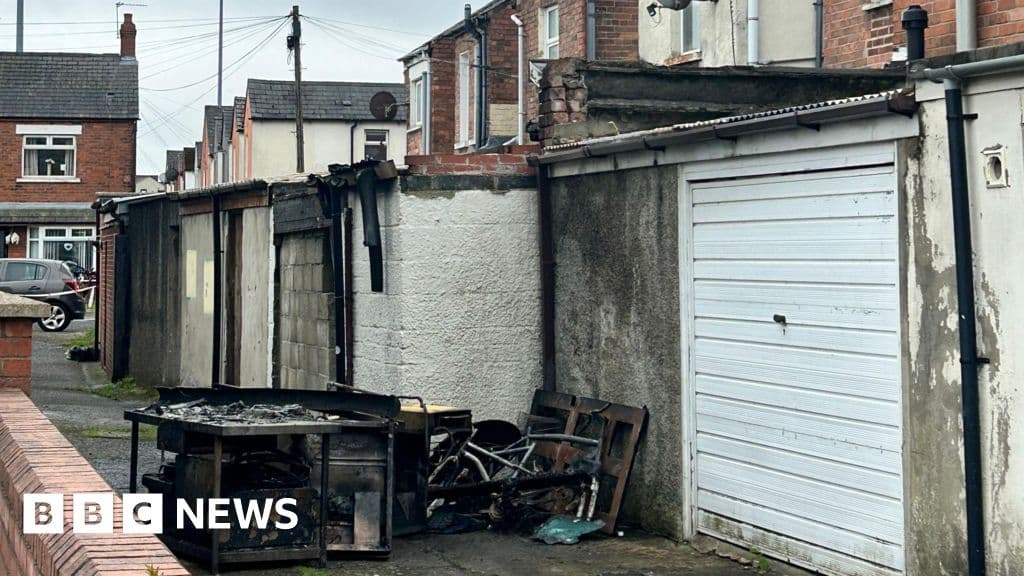
Nineteen people arrested, including a teen, after violence in Northern Ireland and an arson attack.

David Hockney, the iconic British artist known for his diverse work, has passed away at 88.

David Hockney, the revolutionary British artist, has passed away at 88.

Exploring the Historical Roots of Torture Against Palestinians
See every story in News — including breaking news and analysis.
- Netanyahu prepared an unwilling Israeli public to accept a Lebanon ceasefire -
Israeli Prime Minister Benjamin Netanyahu faces an Israeli Jewish public that overwhelmingly supports continued fighting in Lebanon against Hezbollah even if it creates friction with the U.S., according to a recent poll by the nonpartisan Israel Democracy Institute.
Trump asked Netanyahu earlier this week to reduce Israel's offensive in Lebanon, which was threatening the success of a U.S. deal with Iran. Then the U.S. mediated rare talks between Israel and Lebanon in Washington on Tuesday.
"Israel is being dragged, kicking and screaming, into diplomatic initiatives," said Shira Efron, an expert on Israeli and Middle Eastern affairs at the RAND research group. "It's hard for me to see (Netanyahu) doing anything voluntarily that leads to a negotiated settlement."
President Trump on Thursday announced the Lebanon ceasefire after holding phone calls with Netanyahu and Lebanon's president, Joseph Aoun.
A day before the ceasefire announcement, Netanyahu appeared to be preparing the Israeli public for a ceasefire, by framing the offensive as a kind of final battle for the village of Bint Jbeil, a key Hezbollah stronghold.
"We are about to overcome Bint Jbeil," Netanyahu said in a video statement Wednesday, calling it "the capital of Hezbollah in southern Lebanon" and referencing it as the place where Hezbollah's former leader Hassan Nasrallah called Israeli society a flimsy "spider web" in a famous speech.
The ceasefire is expected to be tenuous. Israel demands Lebanon take tangible steps to disarm the Iranian-backed Lebanese Shia Muslim group Hezbollah, a move that would set up Lebanon for friction with its large Shia Muslim population.
"Lebanon's armed forces do not have the capacity to forcibly take Hezbollah's weapons, for a very simple reason. If they were to do so, they would find themselves fighting not only a potent paramilitary force, but also its entire community, because it is more than likely that Shiites would rally to the party's side," writes Michael Young of the Carnegie Middle East Center in Beirut.
- The Gaza disarmament plan will continue to stall -
With the world's attention on Iran and Lebanon, there have been high-level negotiations this week in Cairo between Hamas and top representatives of President Trump's Board of Peace for Gaza.
Last month, they presented Hamas with a proposal to lay down its weapons. This week they are discussing the proposal. A Board of Peace document obtained by NPR calls on Hamas to "decommission" its weapons first.
As proposed, the process would occur in phases across different parts of Gaza, in exchange for the reconstruction of the destroyed territory.
A Hamas military official in Gaza, speaking on condition of anonymity to discuss the closed-door negotiations, said the group is not opposed to disarmament in principle if it is backed by guarantees.
But before Hamas discusses disarmament, it first wants Israel to uphold commitments from the first phase of the ceasefire, including increasing humanitarian aid to Gaza and increasing the number of Palestinians leaving and entering Gaza.
"Our position, as we have stated, is clear. First, a genuine foundation of trust must be built through the complete implementation of the first phase," Hazem Qasem, a Hamas spokesman, told NPR. "After that, things will become easier when we discuss the second phase of the agreement."
Hamas is also waiting to see the outcome of the Iran negotiations, a second Hamas official told NPR on condition of anonymity to discuss the private talks.
Israel is likely to keep troops in Lebanon and Gaza potentially for years.
While negotiations continue with Lebanon and Hamas in Gaza, a status quo solidifies: the Israeli military's occupation of large swathes of territory in Gaza and Lebanon in border lands next to Israel.
In Lebanon, officials say Israeli evacuation orders have displaced more than a million people, mostly from southern Lebanon. Israel has destroyed about 40,000 homes and killed more than 2,000 people, Lebanese officials say. Israel says most of them are Hezbollah fighters. Lebanese officials say more than 180 people killed were children, but have not said how many killed were combatants.
Israel says it is creating what it calls a "buffer zone" in southern Lebanon to distance Hezbollah fire from Israeli border communities. Five military divisions are inside Lebanon, Israel says — a massive military presence estimated to include tens of thousands of soldiers. That amounts to the same number of divisions inside Gaza at the height of the war there.
This is Israel's new defense doctrine after it was surprised by Hamas' attack in 2023.
"We clearly messed up judging adversaries' intentions. So now we're just looking at capabilities and the potential capabilities," Efron said. "We are preemptively taking out adversary capabilities, and we're creating buffer zones to distance our communities - border communities - from the adversaries."
A person briefed on the matter not authorized to speak publicly said until Israel sees progress on Hezbollah disarmament, it has no intention of withdrawing from Lebanon for the coming months and maybe years.
NPR's Anas Baba in Gaza City and Abu Bakr Bashir in Rotherham, U.K. contributed to this report.