250 missing after migrant boat sinks in Indian Ocean
TL;DR
Approximately 250 Rohingya and Bangladeshis are missing after their boat sank in the Andaman Sea. The vessel, which left Bangladesh for Malaysia, capsized due to severe weather and overcrowding.
Key points
- 250 Rohingya and Bangladeshis are missing after a boat capsized
- The boat sank in the Andaman Sea due to severe weather and overcrowding
- Nine survivors were rescued by the Bangladesh Coast Guard
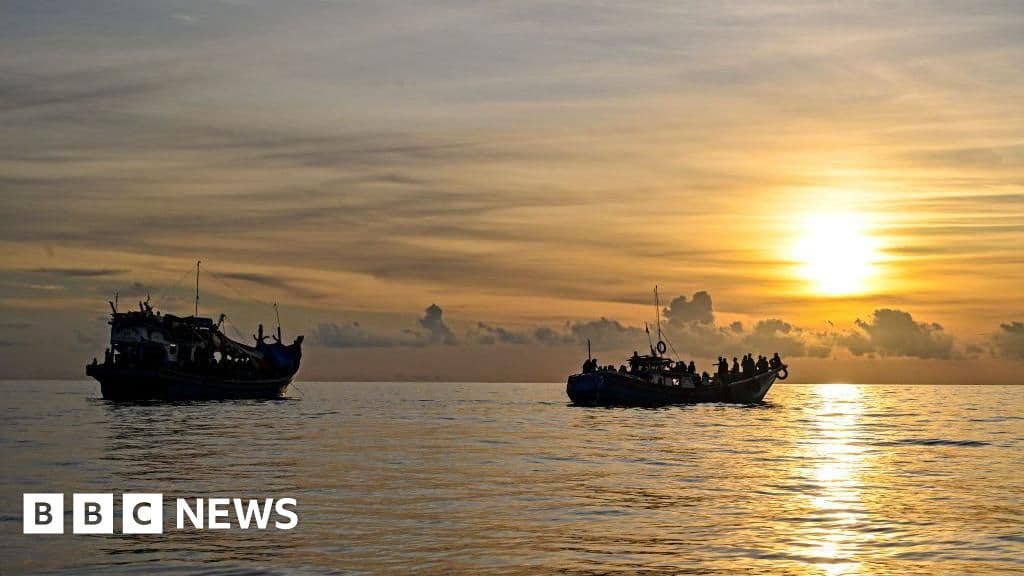
About 250 Rohingya and Bangladeshis, including children, are missing after their boat capsized last week in the Andaman Sea, according to the United Nations' refugee and migration agencies.
The trawler, which had departed from Bangladesh and was bound for Malaysia, "reportedly sank due to heavy winds, rough seas and overcrowding", the agencies said.
The Bangladesh Coast Guard told AFP news agency one of its ships rescued nine people from the vessel on 9 April. It is unclear when exactly the boat capsized.
Hundreds of thousands of Rohingya, one of Myanmar's many ethnic minorities, have been fleeing across the border into Bangladesh since a deadly crackdown in 2017.
The Rohingya, who are primarily Muslim, are denied citizenship by the government of Myanmar, a Buddhist-majority country.
Poor living conditions in Bangladesh however have also prompted some Rohingya to make precarious journeys on overcrowded vessels to Malaysia, a Muslim country which some envision to be a safe haven in the region.
Rafiqul Islam, one of the survivors, told AFP he floated for nearly 36 hours before being rescued, adding that he was burned by oil that spilled from the vessel.
The 40-year-old said the promise of a job in Malaysia was what persuaded him to get on the boat.
"This tragic incident reflects the dire consequences of protracted displacement and the absence of durable solutions for the Rohingya," the UN High Commissioner for Refugees (UNHCR) said in its statement jointly issued with the International Organization for Migration.
Ongoing violence in Rakhine, their home state in Myanmar, has "faded hopes of safe return in the near future", the agencies said, noting that shrinking humanitarian assistance and challenging living conditions in refugee camps have pushed them to "take such dangerous sea journeys in search of safety and opportunity".
These boats are often small and cramped, lacking in basic facilities like fresh water and sanitation. They do not always make it to their destinations. Some die at sea, while others are sometimes detained or deported.
Some have also been turned away upon nearing Malaysia and Indonesia, either by authorities or local coastal communities. In January 2025, Malaysia turned away two boats carrying around 300 refugees after giving the passengers food and water.
"People are dying in the fighting, dying from hunger. So some think it's better to die at sea than to die slowly here," a Rohingya refugee in Cox's Bazar, Bangladesh, had previously told Reuters.
In their statement on Tuesday, the UN agencies called on the international community to sustain funding for Rohingya refugees and their host communities in Bangladesh.
They added: "As Bangladesh marks its new year, this tragedy is a reminder of the efforts urgently needed to address the root causes of displacement in Myanmar and create conditions that would allow Rohingya refugees return home voluntarily, safely and with dignity."
Q&A
What caused the boat carrying Rohingya and Bangladeshis to sink?
The boat reportedly sank due to heavy winds, rough seas, and overcrowding.
How many people were rescued from the capsized boat in the Andaman Sea?
Nine people were rescued by the Bangladesh Coast Guard from the vessel.
Why are Rohingya fleeing to Bangladesh and Malaysia?
Rohingya are fleeing due to persecution and denial of citizenship in Myanmar, following a violent crackdown in 2017.